

Hey Superintelligence Fam 👋
AI isn’t just writing code anymore - it’s auditing decades of it. This week, Mythos proved AI can outpace human hackers at finding vulnerabilities, reshaping cybersecurity’s entire threat landscape.
From Meta embedding AI into daily life to OpenAI charging premium rates for coding power, the race to own your attention is accelerating. The question is no longer “can AI help?” but “who controls it?”
Let’s dive into what’s new this week..
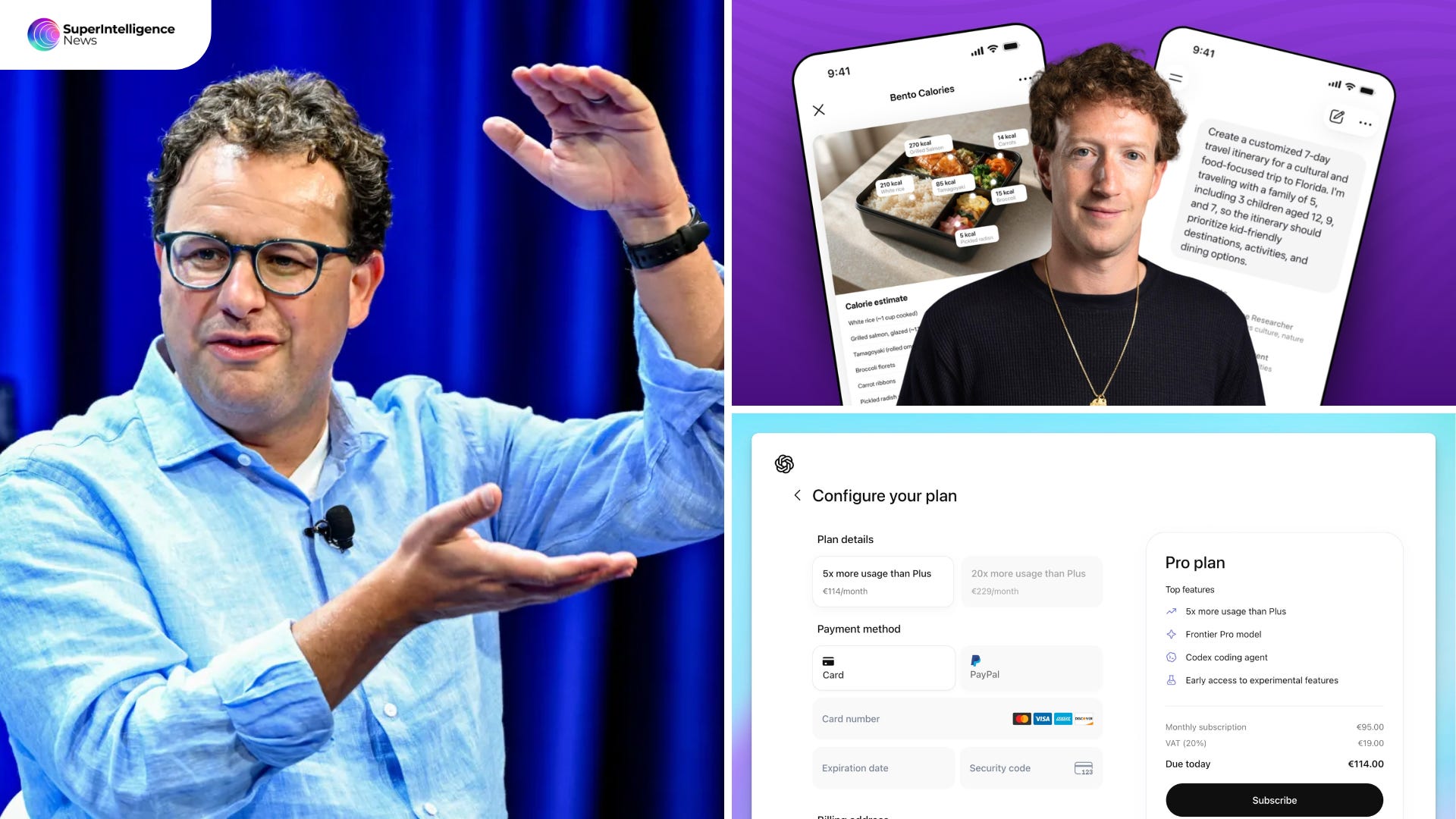

AI That Hacks Before Humans? Claude Mythos Sparks Security Panic : Anthropic’s Claude Mythos is reportedly uncovering deep, decades-old software vulnerabilities at expert level, triggering serious concerns about AI-led cyber risks, misuse potential, and the urgent need for tighter access controls.
Anthropic Puts $100M Behind AI Cyber Defense : With Project Glasswing, Anthropic is deploying Mythos Preview across critical infrastructure via 12 partners, offering $100 million in credits and uncovering thousands of high-severity vulnerabilities in real-world systems.
Meta’s New AI Wants to Live Everywhere You Do : Meta’s Muse Spark brings multimodal reasoning, visual intelligence, and tool use into its ecosystem, powering Meta AI across apps and smart glasses as it pushes toward deeply integrated, always-on personal AI experiences.
$100 ChatGPT Plan Is OpenAI’s Power Move for Coders : OpenAI’s new $100/month ChatGPT Pro tier delivers up to 5x more Codex capacity than Plus, targeting heavy coding workflows as Codex usage crosses 3 million weekly users globally.

Meta Muse Spark : Meta’s multimodal model powers Meta AI today, with rollout planned across five surfaces including WhatsApp, Instagram, Facebook, Messenger, and AI glasses, signaling a major play.
Adobe Student Spaces AI : Adobe’s student hub can ingest up to 100 files, each 600 pages or fewer, then turn them into flashcards, quizzes, podcasts, presentations, and study tools.
Google AI Edge Eloquent : Google’s offline-first dictation app uses Gemma to strip filler words, polish rough speech into cleaner prose, and promises premium voice transcription without a subscription today.

Meta-Harness : Stanford and MIT’s Meta-Harness treats prompt plumbing as an optimization target, boosting text classification by 7.7 points with 4x fewer tokens and lifting IMO-style math accuracy 4.7 points.
Coding Agents are Effective Long-Context Processors : Instead of stretching context windows, this paper lets coding agents use files and tools, beating prior long-context methods by 17.3% on average across corpora reaching 3 trillion tokens.
Drop the Hierarchy and Roles: How Self-Organizing LLM Agents Outperform Designed Structures : Across 25,000 tasks, self-organizing agents beat centralized setups by 14%, generated 5,006 emergent roles, and scaled to 256 agents without quality loss, making autonomy look powerful.


This week AI ethics attention focused on the EU weighing tougher oversight for ChatGPT, India tightening deepfake rules, Anthropic launching Project Glasswing with $100 million in credits after Mythos found thousands of vulnerabilities, and OpenAI unveiling a Child Safety Blueprint and Safety Fellowship.

Thank you for tuning in to this week’s edition of Superintelligence Newsletter! Stay connected for more groundbreaking insights and updates on the latest in AI and superintelligence.
For more in-depth articles and expert perspectives, visit our website | Have feedback? Provide feedback.
To explore Superintelligence Media : Explore Here
Stay curious, stay informed, and keep pushing the boundaries of what’s possible!
Until Next Time!
Superintelligence Team.