

Hey Superintelligence Fam 👋
This week captures a turning point where ambition collides with reality. Anthropic’s leaked Claude Mythos hints at powerful but risky capabilities, while OpenAI stepping back from Sora signals tightening priorities across frontier AI labs.
At the same time, breakthroughs across Meta, Mistral, and Google show rapid innovation continuing beneath the surface, even as cost, safety, and governance reshape how aggressively AI systems are deployed globally.
Let’s dive into what’s new this week..

Anthropic’s Leaked Claude Mythos Sparks Fresh AI Safety Alarm : A leaked draft revealed Anthropic’s unreleased Claude Mythos, described as its most powerful model yet, with unusually strong cybersecurity capabilities that raised concerns about misuse, safety, and deployment costs.
Why OpenAI Pulled the Plug on Sora : OpenAI reportedly scrapped Sora after heavy compute demands, fading user momentum, and fierce competition in AI video, showing how quickly expensive frontier products can lose strategic priority.
Meta’s TRIBE v2 Brings AI Closer to Modeling the Human Brain : Meta’s TRIBE v2 predicts neural responses to sight, sound, and language, pushing brain-AI research forward with a model, paper, code, and interactive demo for neuroscience exploration.
China’s Robot Push Gets an OpenClaw Boost Despite Security Warnings : Chinese robotics and tech hubs are embracing OpenClaw-powered agents with subsidies and real-world deployments, even as regulators warn about privacy, security, and sensitive data risks.

Voxtral TTS : Mistral’s 4B-parameter Voxtral TTS supports 9 languages, adapts to a voice from as little as 3 seconds, delivers 70ms latency, and starts at $0.016 per 1K characters.
Gemini 3.1 Flash-Lite Browser : Google’s Flash-Lite Browser showcases Gemini 3.1 Flash-Lite, a preview model priced at $0.25 per 1M input tokens and $1.50 per 1M output tokens, built for fast, high-volume web generation.
Uni-1 by Luma : Luma’s Uni-1 ranks first in human preference Elo for overall quality, style and editing, and reference-based generation, with 2048px image generation priced at about $0.0909 per image.

The Spike, the Sparse and the Sink : LeCun’s team shows spikes and attention sinks are mostly a pre-norm artifact in Transformers, not a necessity, revealing fresh paths for compression, quantization, and KV-cache optimization.
KARL : Databricks’ KARL spans 6 search regimes and is Pareto-optimal against Claude 4.6 and GPT 5.2, hitting 59.6 on BrowseComp-Plus and 85.0 on TREC-Biogen.
Memex(RL) : Memex(RL) gives agents indexed memory instead of lossy summaries, preserving full evidence externally while using smaller working context, improving long-horizon task success without brute-force context growth.


EU lawmakers backed a ban on harmful nudify apps, Germany saw mass protests over deepfake porn abuse, and wider debate intensified over who should govern AI through corporate-made systems like Claude’s “constitution”.

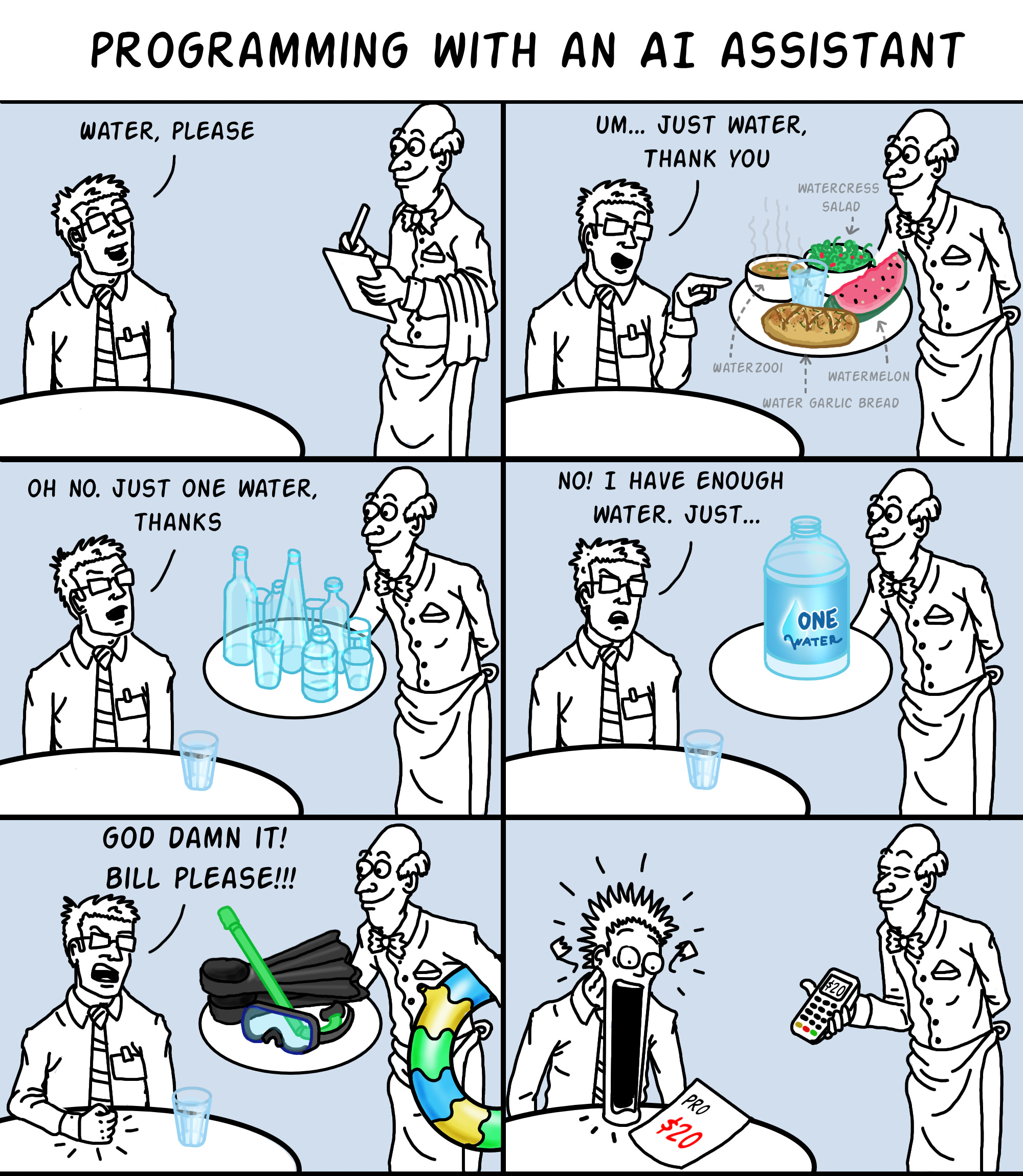
Market Sentiments
Thank you for tuning in to this week’s edition of Superintelligence Newsletter! Stay connected for more groundbreaking insights and updates on the latest in AI and superintelligence.
For more in-depth articles and expert perspectives, visit our website | Have feedback? Provide feedback.
To explore Superintelligence Media : Explore Here
Stay curious, stay informed, and keep pushing the boundaries of what’s possible!
Until Next Time!
Superintelligence Team.
This is why I think token growth is a weak long-term strategy on its own. The smarter path (as we have found) is usually to reduce what needs to sit in live context at all by pushing more memory, retrieval, and evidence outside the prompt, so you pay for reasoning where it matters rather than dragging the whole past behind every call.